Healthy hemoglobin
Healthy hemoglobin stays flexible whether it is carrying oxygen or not.
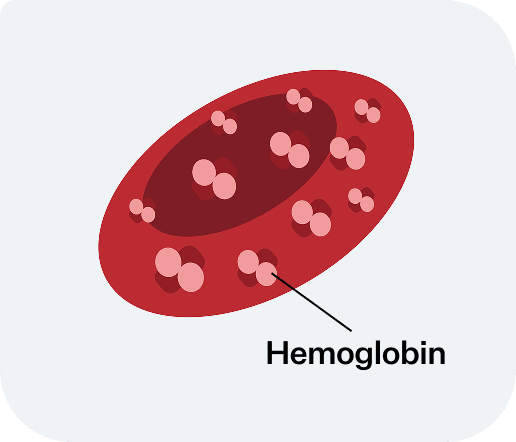


In sickle cell disease, the body makes a type of hemoglobin called hemoglobin S (HbS). Hemoglobin is a protein in red blood cells that carries oxygen from the lungs and delivers it throughout the body.
Healthy hemoglobin stays flexible whether it is carrying oxygen or not.
The genetic change in HbS causes the hemoglobin to link together.
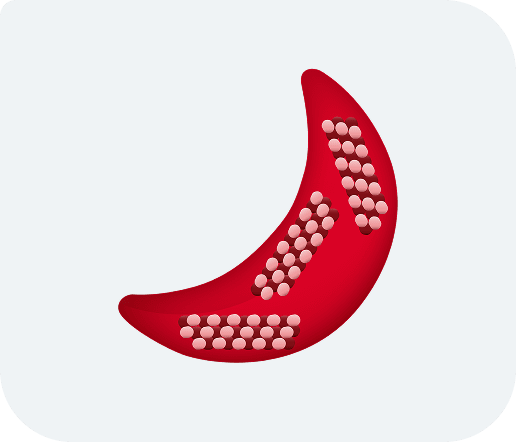
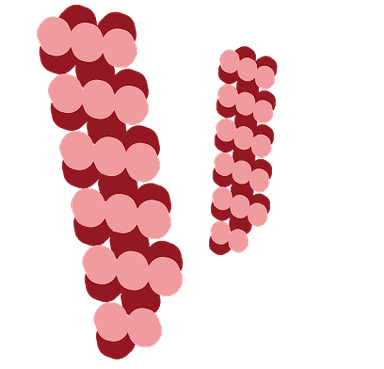
When red blood cells release oxygen, unhealthy hemoglobin molecules link together (polymerization), and form into stiff rods inside the cell.


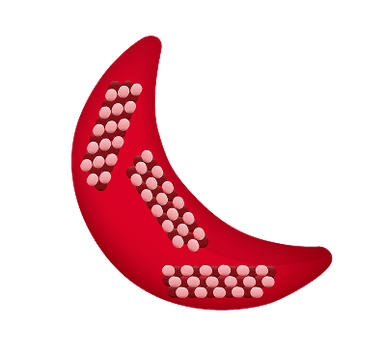
These rods bend red blood cells into a sickle shape.
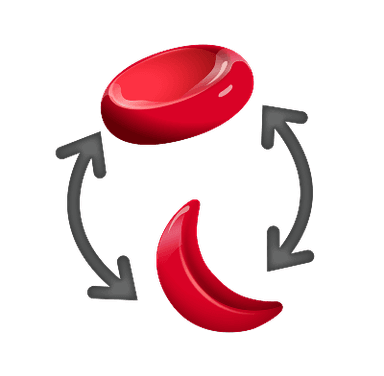
As red blood cells release and pick up oxygen, they repeatedly sickle and unsickle until they become permanently sickled over time.
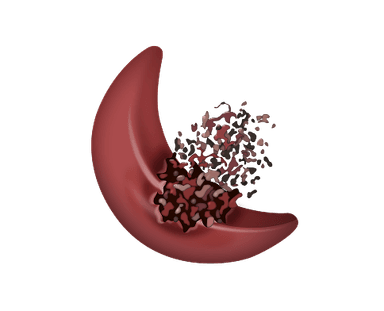
Fragile red blood cells cannot withstand the stress of repeated sickling and unsickling and break down.
Repeated sickling and unsickling puts ongoing stress on red blood cells. This leads to red blood cells breaking down early.
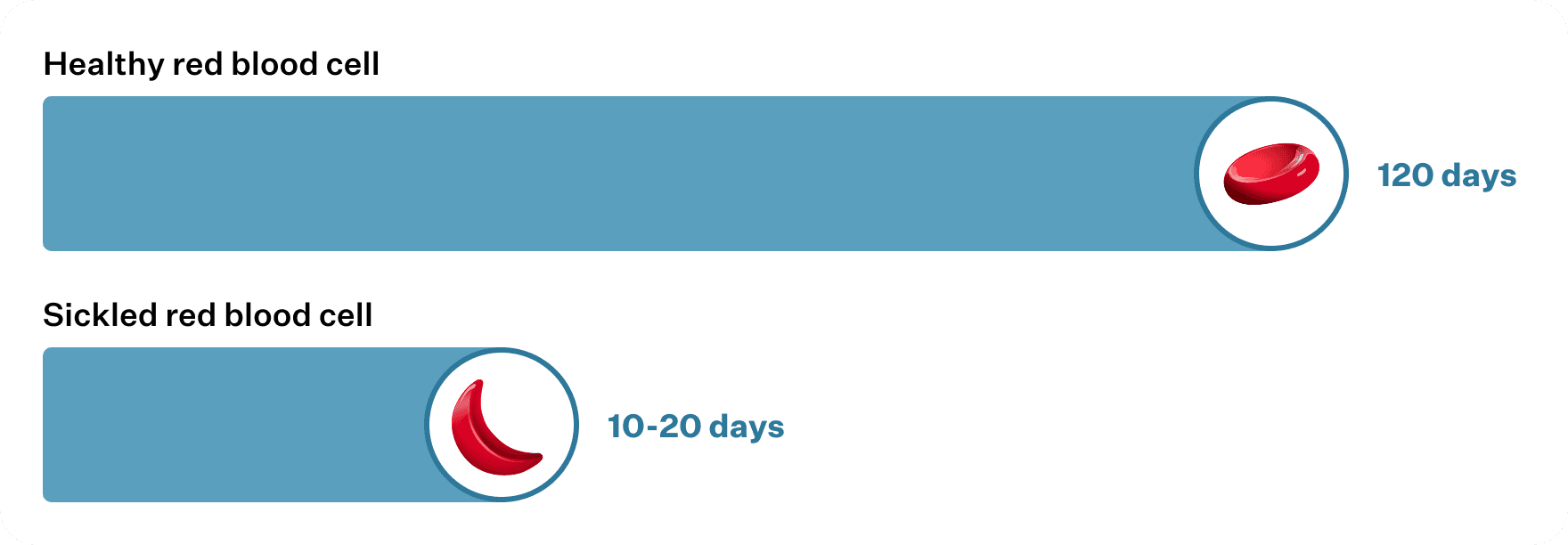
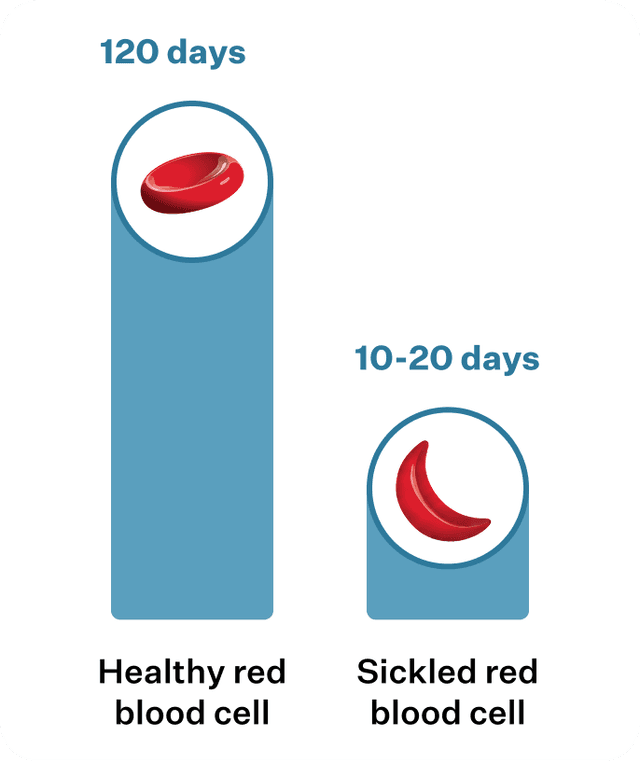
With less energy (ATP) and more stress, red blood cells in sickle cell disease break down early. This is called hemolysis.
Images are for illustrative purposes only.