
Contact us at 1-877-77-AGIOS (1-877-772-4467)
Hemolysis is the early breakdown of red blood cells. Sickled red blood cells break down too fast, before new red blood cells can be made. When red blood cells break down faster than the body can replace them, it can lead to hemolytic anemia (low hemoglobin). When you have hemolytic anemia, your organs and tissues don’t get enough oxygen.
Due to this constant stress, red blood cells become damaged. This can cause them to break down earlier than normal (hemolysis).
Toggle to see how sickle cell disease affects the blood vessel.
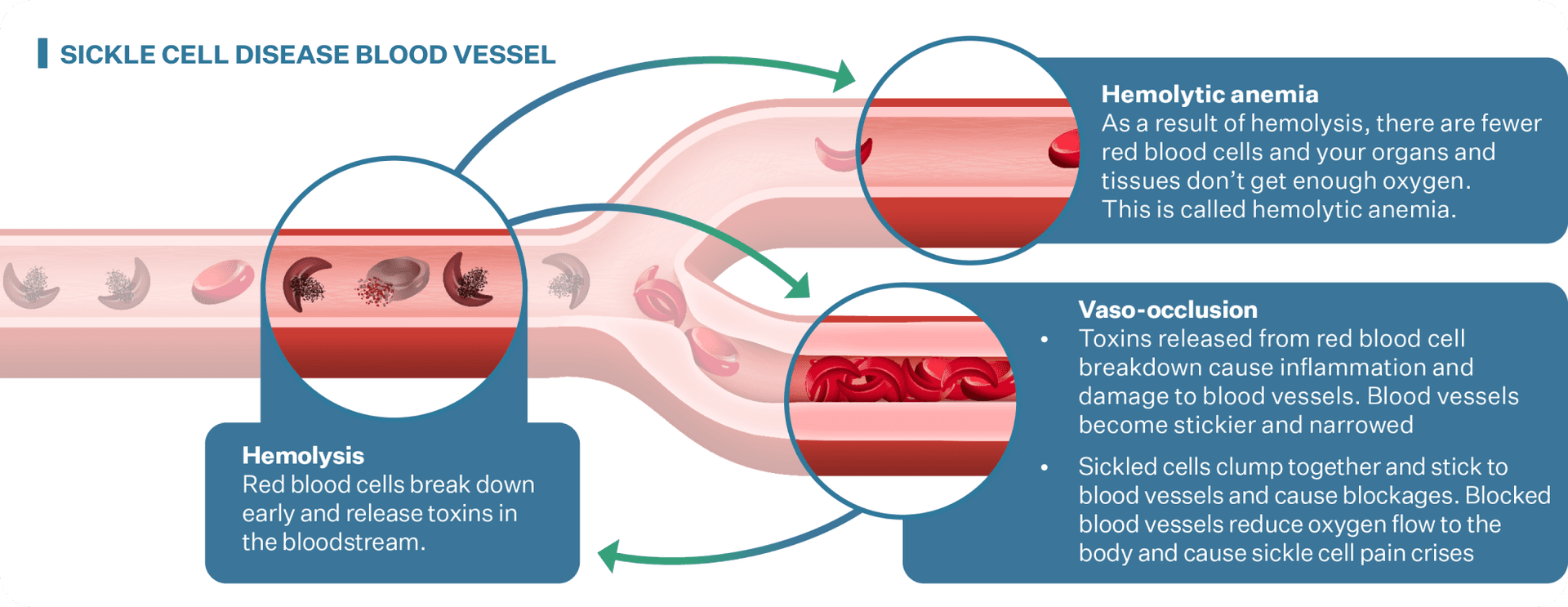
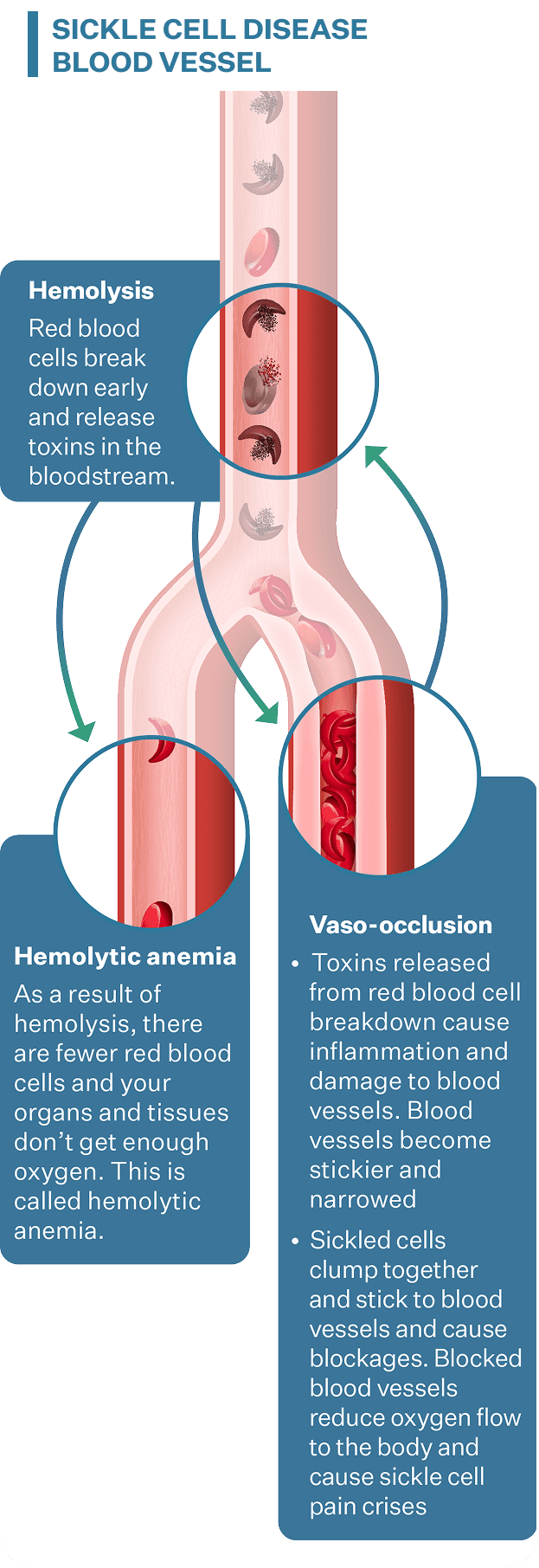
Hemolysis causes red blood cells to break down early in the bloodstream, which can lead to hemolytic anemia and contributes to blockages in the blood vessels, called vaso-occlusions.
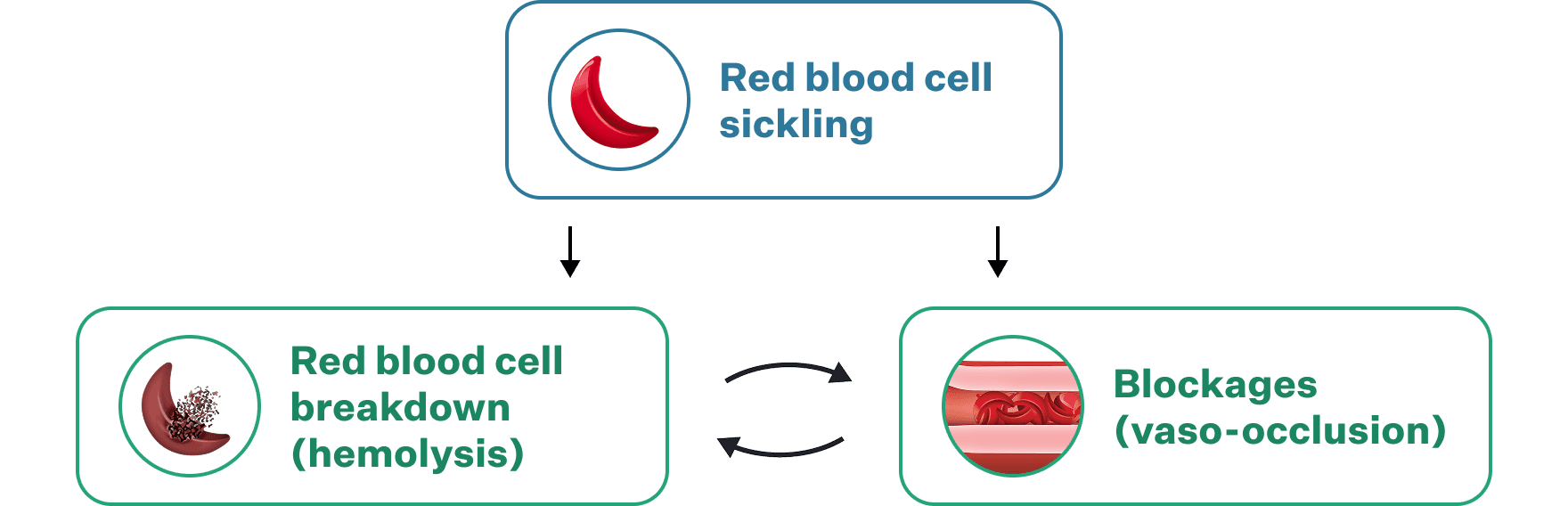
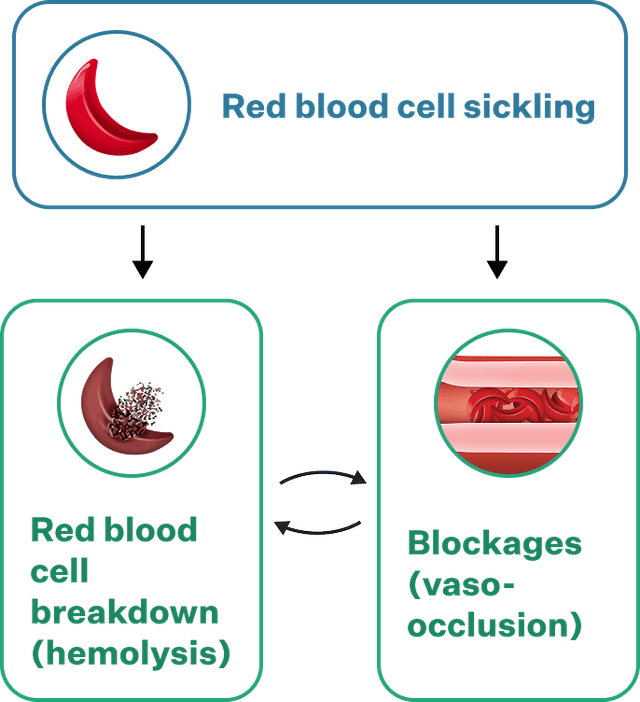
Blockages (vaso-occlusions) can cause extreme pain crises. Like hemolysis, blockages can lead to organ damage.
| People with sickle cell disease withPeople with SCD with 0-1 VOC per year (n=45) | |
|---|---|
| Retina damage (retinopathy) | 60% |
| Gallstones (cholelithiasis) | 60% |
| Inflammation and blockages in the lungs (acute chest syndrome) | 50% |
| High blood pressure in the lungs (pulmonary hypertension) | 47% |
| Kidney(s) leaking blood protein (microalbuminuria) | 36% |
| Death of bone tissue (osteonecrosis) | 24% |
| Kidney failure (renal failure) | 21% |
| Leg ulcer | 11% |
| Stroke | 11% |
| Prolonged, painful erection (priapism) | 9% |
Based on a 2006 study of 104 adults with main gene types of sickle cell disease in the Netherlands. Adults were screened for sickle cell disease-related complications twice a year in the 7-year follow-up study.